The World's Only Private Safari Heritage Reserve

Mwanya Chiefdom · Luangwa Valley · Zambia
_edited_edited.png)
A Safari Heritage Site — Where the Walking Safari Began
CHIBEMBE WILDLIFE RESERVE
Not approximately.
Not symbolically.
Here.
Where the main Luangwa channel and the Chibembe Channel converge, water backs up every wet season and floods north — across the reserve, across Chibembe Island, and deep into the national park. The silt it deposits renews every habitat above the confluence, year after year. This is why the wildlife here is exceptional year in and year out.
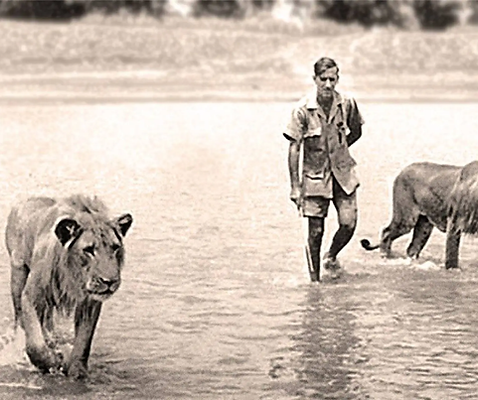
It is also why Norman Carr — a game ranger who had spent decades on foot in this landscape — understood what this ground revealed. The wildlife was so present that a vehicle felt beside the point. He got out. He walked. The Chibembe area was simply the place where it became undeniable to anyone who visited.
Every walking safari in Africa traces its lineage to what was pioneered here.

The Birth Certificate

“A seasonal pontoon crossing built across the Luangwa at Chibembe to permit access from the east. Lion Camp and viewing tracks built.”
— Luangwa Valley Development Unit Record, 1955 (Ranger W.E. Poles).
Eleven words in a government ledger. The beginning of everything.
3,500
PRIVATE ACRES
1955
BIRTH CERTIFICATE OF THE WALKING SAFARI
4.6
MILES OF RIVER FRONTAGE
0
OTHER OPERATORS IN THIS SECTOR
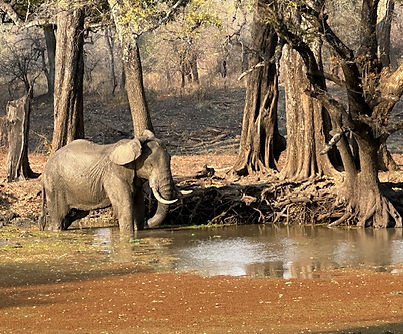
Elephant gatherings · Ancient winterthorn
The Back Lagoon

Buffalo · Lion · Silt-fed grassland
Kalovia Island

The story begins here
The Firepit
“The confluence backs up both channels every wet season. The floods spread north. The silt renews everything. This is why the wildlife here is unlike anywhere else in the valley.”
- The Confluence · The Engine of the Ecosystem
THE PIONEER
He got out.
He walked.
Everything changed.
He replaced the rifle with knowledge. He replaced pursuit with understanding. Norman Carr came to the Luangwa not as a visitor but as a ranger — a man who had spent years on foot in this landscape before it was a safari destination. Faced with wildlife so present that a vehicle felt beside the point, he stepped out and walked. What followed — the guided walking safari — changed the safari industry forever.